


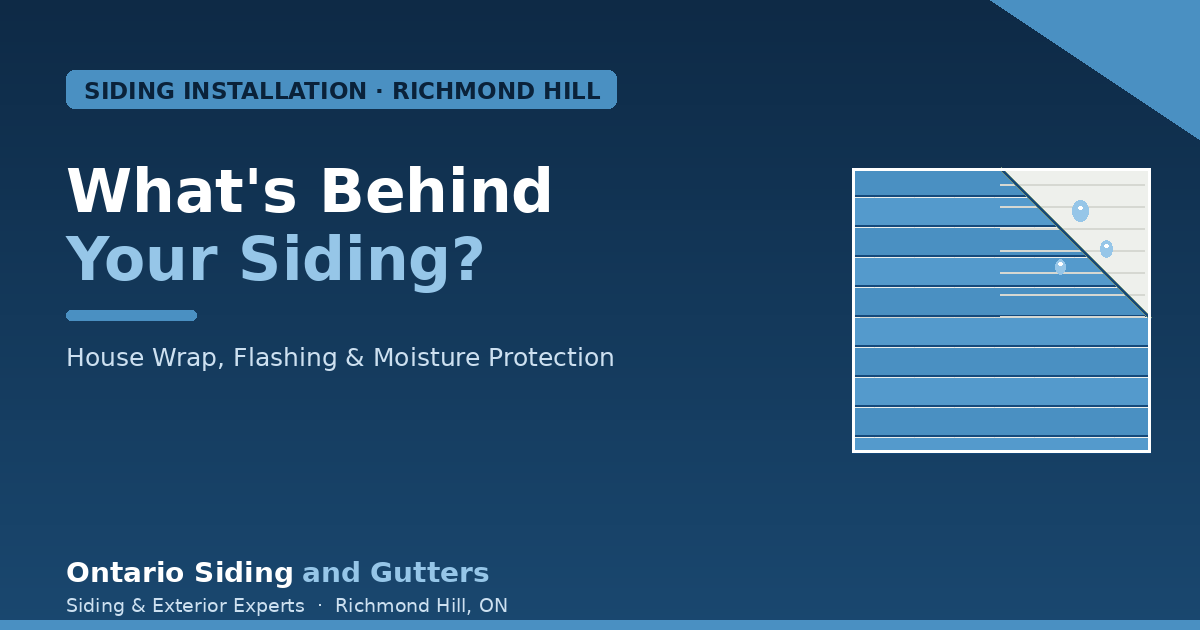
When most people picture siding, they think about colour and curb appeal, and fair enough, it’s the first thing anyone sees. But here’s the part that surprises homeowners: the siding itself isn’t what keeps your walls dry. The real protection happens in the layers you never see, behind the panels. Get those layers right and your home shrugs off decades of Ontario weather. Get them wrong, and you’re looking at rot, mould, and expensive repairs down the road. That’s exactly why quality siding installation in Richmond Hill is about far more than nailing up pretty boards.
So let’s pull back a panel and look at what’s actually going on behind your siding, and why house wrap, flashing, and proper moisture management are the unsung heroes of your home’s exterior.
Your Wall Is a System, Not a Single Layer
Here’s the first thing to wrap your head around: siding is not waterproof, and it was never meant to be. Wind-driven rain, melting snow, and condensation all find their way behind it. That’s normal, and good wall design actually plans for it. A properly built exterior wall is a system of layers, each with a job, working from the outside in:
- Siding, the first line of defence that sheds the bulk of the water and takes the UV and the weather.
- An air gap or rainscreen (in the best installs), giving any water that gets past the siding a path to drain and the wall a way to dry.
- House wrap, the weather-resistive barrier, your true secondary line of defence.
- Sheathing (the plywood or OSB) that gives the wall its structure.
- Framing, insulation and the interior layers behind that.
When people talk about exterior wall protection, this whole assembly is what they mean. And the two layers that do the heavy lifting against water are the house wrap and the flashing.
House Wrap: Your Wall’s Raincoat
That white or off-white membrane you’ve seen stapled to a house under construction? That’s house wrap, and it’s doing one of the most important jobs on the whole building. Think of it as a raincoat for your walls. Its role sounds simple but it’s clever:
- It sheds liquid water. Any moisture that slips behind the siding hits the wrap and drains down and out, away from the sheathing.
- It breathes. Here’s the clever part, a good house wrap stops liquid water but still lets water vapour pass through. So if moisture does get into the wall, the assembly can dry out instead of staying trapped and rotting.
- It blocks air leaks. Properly taped, house wrap also cuts drafts, which helps with comfort and energy bills.
But, and this is the big one, house wrap only works if it’s installed correctly. The product is rarely the problem; the installation usually is. Done right, it’s:
- Lapped shingle-style, upper pieces overlapping lower pieces, so water always flows over a seam, never into it.
- Seams and penetrations taped so wind-driven water can’t sneak behind it.
- Integrated with the flashing around every window, door, and opening, which is where most leaks actually start.
Reverse-lapped wrap, where a lower piece sits over an upper piece, is a classic mistake that funnels water straight into the wall. It’s the kind of detail a rushed or inexperienced crew gets wrong, and you won’t see it until the damage shows up years later.
Flashing: The Details That Make or Break a Wall
If house wrap is the raincoat, flashing is the set of carefully placed seams and collars that keep water out of the vulnerable spots, around openings and wherever two surfaces meet. Flashing is thin metal or membrane, and it’s deceptively important. The most common types on a home like yours:
Window and door flashing
Openings are the weakest points in any wall, water loves an edge. Proper window flashing means a sill pan under the window to catch and drain any water, side flashing, and head flashing above, all lapped with the house wrap so water sheds outward at every step. Skip or botch this and you get leaks, drafts, and rotting window framing.
Step flashing
Where a roof meets a wall, like along a dormer or where a lower roof ties into the house, individual pieces of step flashing are woven in with each course so water running down the roof is directed away from the wall rather than behind it.
Kick-out flashing
This small piece punches above its weight. Where a roof edge ends at a wall, a kick-out flashing diverts the rushing water sideways into the gutter instead of letting it pour down behind the siding. Missing kick-out flashing is one of the most common causes of hidden rot we see, a tiny part, a huge consequence.
Trim and transition flashing
Horizontal joints, trim boards, and the transitions between different materials all need flashing (often Z-flashing) so water is directed out and over the layer below. Every one of these small details is a place a wall either keeps water out, or doesn’t.
Notice the theme: everything laps so water flows down and out, never in and back. That “shingle logic” runs through the whole assembly, and great house wrap installation and flashing is really just getting that logic right at every single junction.
Why Moisture Protection Matters So Much
Water is, without exaggeration, the number-one enemy of any building. When moisture gets into a wall and can’t get out, the damage compounds quietly:
- Wood rot in the sheathing and framing, which weakens the structure itself.
- Mould and mildew, a health concern as much as a building one.
- Ruined insulation, which loses its R-value when it gets wet, so your heating and cooling bills climb.
- Interior damage, stains, peeling paint, and warped finishes showing up inside.
- Pest problems, since damp, soft wood is an open invitation to insects.
The cruel part is that it’s invisible. By the time you see a stain on an interior wall or smell something musty, the problem behind the siding has usually been developing for a long time. That’s why siding moisture protection is about prevention built into the wall, not a fix you add later.
Warning signs of hidden moisture trouble:
- Bubbling, blistering, or peeling paint on exterior or interior walls
- Soft or spongy spots in the wall or around windows
- A persistent musty smell indoors
- Water stains, especially below windows or where roofs meet walls
- Visible mould, or siding that’s warping or pulling away
The Rainscreen Advantage
One more upgrade worth knowing about: the rainscreen. Instead of pinning siding tight against the house wrap, a rainscreen install leaves a small, deliberate air gap behind the siding. That gap does two things, it gives any water that gets in a clear path to drain straight down and out, and it lets air circulate so the wall dries faster. In our climate, with its freeze-thaw cycles and heavy seasonal moisture, that extra drying potential adds real years to a wall. It’s a mark of a siding job done with the long game in mind.
Why the Installer Matters More Than the Product
Here’s the honest truth of this whole topic: you can buy the best siding, the best house wrap, and the best flashing on the market, and still end up with a wall that leaks, if the details are wrong. The overwhelming majority of moisture failures aren’t product failures. They’re installation failures:
- House wrap lapped the wrong way
- Missing or improperly integrated flashing at windows and roof-wall joints
- Penetrations (vents, hose bibs, lights) left unsealed
- Fasteners driven through flashing, creating new leak paths
This is why choosing experienced siding contractors in Richmond Hill matters so much. The visible result looks the same on day one, beautiful new siding either way. The difference is what’s happening behind it, and whether it’ll still be protecting your home in twenty years. Good contractors also tie the whole system together, including your gutters and water management, so moisture is steered away from the walls in the first place.
Protect What’s Behind Your Siding
Ontario Siding and Gutters installs siding the right way, with proper house wrap, flashing and moisture protection, across Richmond Hill and the GTA. Book a free consultation and we’ll make sure your walls are built to last.
Frequently Asked Questions
What is house wrap and do I really need it?
House wrap is a weather-resistive barrier installed behind your siding. It sheds any water that gets past the siding while still letting water vapour escape so the wall can dry. It’s a core part of moisture protection, and building codes generally require a water-resistive barrier behind cladding, so yes, you need it, and you need it installed properly.
Isn’t my siding waterproof on its own?
No, and it isn’t designed to be. Siding sheds most of the water and handles the sun and weather, but wind-driven rain and condensation still get behind it. The house wrap and flashing behind the siding are what actually keep that moisture out of your wall structure.
What does flashing do, and why is it so important?
Flashing directs water away from the vulnerable points in a wall, around windows and doors, and where roofs meet walls. Details like sill pans, head flashing, step flashing, and kick-out flashing stop water from getting behind the siding at these junctions. Missing or poorly installed flashing is one of the most common causes of hidden water damage.
How do I know if moisture is getting behind my siding?
Watch for bubbling or peeling paint, soft spots in the wall, water stains (especially below windows or where roofs meet walls), a musty smell indoors, or siding that’s warping or pulling away. Because the damage is hidden, it’s worth having a siding professional inspect the walls if you notice any of these.
Does it matter who installs my siding?
Enormously. Most moisture problems come from installation errors, not bad products, things like reverse-lapped house wrap, missing flashing, or unsealed penetrations. Experienced siding contractors get the hidden details right, which is what determines whether your walls stay protected for the long haul.